

Ambitious learners are rewriting the playbook for STEM exploration. With affordable sensors, open datasets, and collaborative platforms, students can now reach for the stars—literally—while also decoding the mind and building intelligent machines. The most impactful projects sit at the intersection of curiosity and real-world constraints: a backyard observatory that contributes variable star data to global catalogs; a psychology experiment that reveals how attention shapes memory; or a swarm of low-cost robots coordinating like ants to solve complex tasks. This guide maps out high-value directions across astronomy, cognitive science, and robotics, offering practical paths to meaningful discovery and publication-worthy results. Each section highlights achievable milestones, tools, and research-grade methods so motivated teams can move from ideas to evidence, and from prototypes to insights.
Stellar Curiosity in Action: Astronomy Research and Space Telescope Projects
Working in astronomy empowers students to investigate the universe using both backyard gear and professional-grade datasets. Start by defining a tight research question—this turns vague ambition into specific, testable astronomy research ideas. For optical observations, a modest telescope with a CMOS camera and tracking mount can generate time-series photometry on variable stars, exoplanet transits, or asteroid light curves. Join the American Association of Variable Star Observers (AAVSO) to compare your measurements against standards, calibrate with flat/dark frames, and contribute to long-term datasets. This discipline builds statistical rigor: students learn error propagation, signal-to-noise estimation, and how cadence affects detectability.
Remote and archival work opens even broader frontiers. NASA’s TESS and ESA’s Gaia missions provide torrents of public data that can be mined for transit signatures, stellar rotation periods, or parallax-informed distances. Students can practice model fitting with transit curves, apply periodograms to search for periodicity, and test hypotheses about starspot evolution. For deep-sky morphology, classification projects using Sloan Digital Sky Survey images offer a pathway into machine learning: train a convolutional network to distinguish spirals from ellipticals, then compare performance with classical features like Sérsic index or asymmetry.
Hands-on Space Telescope Projects are possible even without spaceflight budgets. High-altitude balloon payloads approximate stratospheric seeing conditions; a student-led gondola with a stabilized imaging platform can capture near-space observations and measure atmospheric effects on photometry. Alternatively, prototype a CubeSat optical concept on the ground: model the point-spread function, simulate diffraction spikes, and quantify thermal drift. Document every design trade-off—mass, power, bandwidth—as a professional engineering notebook would. For spectroscopy, a star analyzer grating or low-cost slit spectrograph reveals stellar absorption lines; students can estimate stellar temperature via continuum shape or examine Balmer series strengths in different spectral types.
Real-world examples show how student teams add value. Zooniverse-style campaigns have flagged transient events and peculiar galaxies that automated pipelines overlook. High school observatories have published minor planet astrometry used by the Minor Planet Center. With disciplined protocols and reproducible notebooks, even small teams push the frontier—transforming curiosity into measurable contributions while learning the language of uncertainty, calibration, and peer review.
Inside the Mind: Experimental Pathways in Cognitive Science for High School
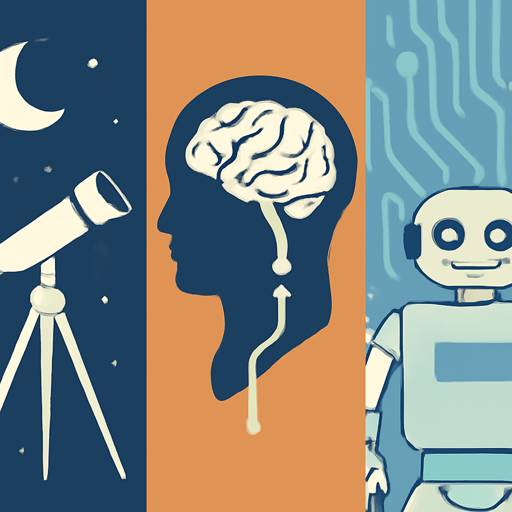
The human mind is a high-speed, resource-limited information processor, and students can explore its mechanisms with carefully designed experiments. A robust entry point is the Stroop task, which probes cognitive control by pitting word meaning against ink color. By measuring reaction times and accuracy under congruent versus incongruent conditions, students can quantify interference and practice fundamentals: randomization, counterbalancing, and outlier handling. Another classic is the attentional blink—briefly presenting two target stimuli in rapid serial visual presentation reveals how allocating attention to the first target impairs detection of the second. This teaches temporal limits of awareness and statistical analysis of trial-level data.
Psychophysics brings precision to perception. Implement a contrast sensitivity or just-noticeable-difference experiment using grayscale patches or tones, then fit functions (e.g., logistic) to estimate perceptual thresholds. Students learn to pre-register hypotheses, compute effect sizes, and report confidence intervals—skills that elevate school projects to research-grade studies. Open-source tools like PsychoPy, jsPsych, or OpenSesame enable browser-based experiments with accurate timing; spreadsheets or Python notebooks handle data cleaning and visualization. Ethical practice matters: obtain informed consent, preserve anonymity, and avoid studying vulnerable populations without proper oversight. Replication attempts of published effects (e.g., memory interference patterns) teach critical evaluation and reduce publication bias.
Crossover with neuroscience is possible using low-cost hardware. EEG headsets can measure event-related potentials in simple oddball paradigms, while heart-rate variability sensors explore links between arousal and task performance. While absolute signal quality may be lower than lab-grade systems, students gain experience with filtering, artifact rejection, and time-locking. Natural language processing can analyze qualitative responses, extracting sentiment or topic structure when examining memory or learning strategies. Programs centered on cognitive science for high school often provide step-by-step mentoring, datasets, and peer communities that accelerate this growth, helping learners move from anecdotal observations to falsifiable models.
Case studies highlight what’s possible. Student teams have replicated the spacing effect—demonstrating that distributing study sessions outperforms cramming—by running randomized classroom trials and reporting mixed-model analyses. Others built visual search experiments testing feature versus conjunction search, connecting their results to theories of parallel and serial processing. By prioritizing open materials, clean code, and transparent reporting, students create projects that withstand scrutiny and inform educators, clinicians, and designers alike.
Embodied Intelligence: Humanoid and Swarm Robotics Student Projects
Robotics makes intelligence tangible. For humanoid robotics for students, aim for systems that balance feasibility with ambition: a 10–16 DOF biped using metal-geared servos, 3D-printed joints, and an IMU for stabilization. Start with statically stable poses before attempting dynamic gaits; implement zero moment point approximations or capture-point control to keep center of mass over the support polygon. Inverse kinematics libraries (or a custom solver) map target trajectories to joint angles, while PID tuning and state estimation smooth motion. Vision adds capability: a monocular camera feeding a lightweight keypoint detector can enable gesture tracking; fusing optical flow with IMU data improves step adaptation on uneven ground.
Development workflows matter as much as hardware. Use ROS 2 or micro-ROS for modular nodes, separating perception, control, and planning; log rosbags for post-hoc analysis. Simulate early in Gazebo or Webots to refine gait parameters and test fall scenarios safely. Safety interlocks—current limits, thermal monitoring, and soft joint stops—protect hardware and bystanders. When exploring learning-based control, constrain action spaces and incorporate curriculum learning to stabilize policy training. Students can present contributions such as improved heel-to-toe transitions or lower-power standby stances quantified by energy per meter traveled.
On the collective intelligence side, Swarm robotics student projects showcase how many simple agents can produce sophisticated behaviors. Begin with three to ten low-cost bots built on microcontrollers, differential drive, and proximity sensors; layer communication with BLE mesh, Zigbee, or lightweight UWB for ranging. Implement canonical algorithms: Reynolds-style flocking (separation, alignment, cohesion), leader–follower formation control, or distributed task allocation via market-based negotiation. Robustness is the hallmark of swarms—evaluate performance under node failures, message loss, or sensor noise and report metrics like coverage ratio, mean time to complete, and resilience curves.
Real-world inspirations abound. NASA’s “Swarmies” tested distributed search for resource collection, while Harvard’s Kilobots demonstrated shape formation at scale using minimal hardware. Student adaptations can focus on disaster-response scouting: a swarm partitions an unknown map, relays findings through multi-hop communication, and reprioritizes frontiers based on information gain. For environmental monitoring, equip bots with low-cost air quality or soil moisture sensors; compare centralized versus decentralized mapping with occupancy grids and consensus filters. Visualize emergent behavior clearly—heatmaps of coverage, timelines of message flux, and ablation studies—so your findings generalize. By combining careful systems engineering with testable hypotheses, students transform hobby platforms into publishable research and cultivate skills that scale from classroom labs to field-ready robotic ecosystems.

